OLS and Odisha Rationalists Promotes Organ and Body Donation
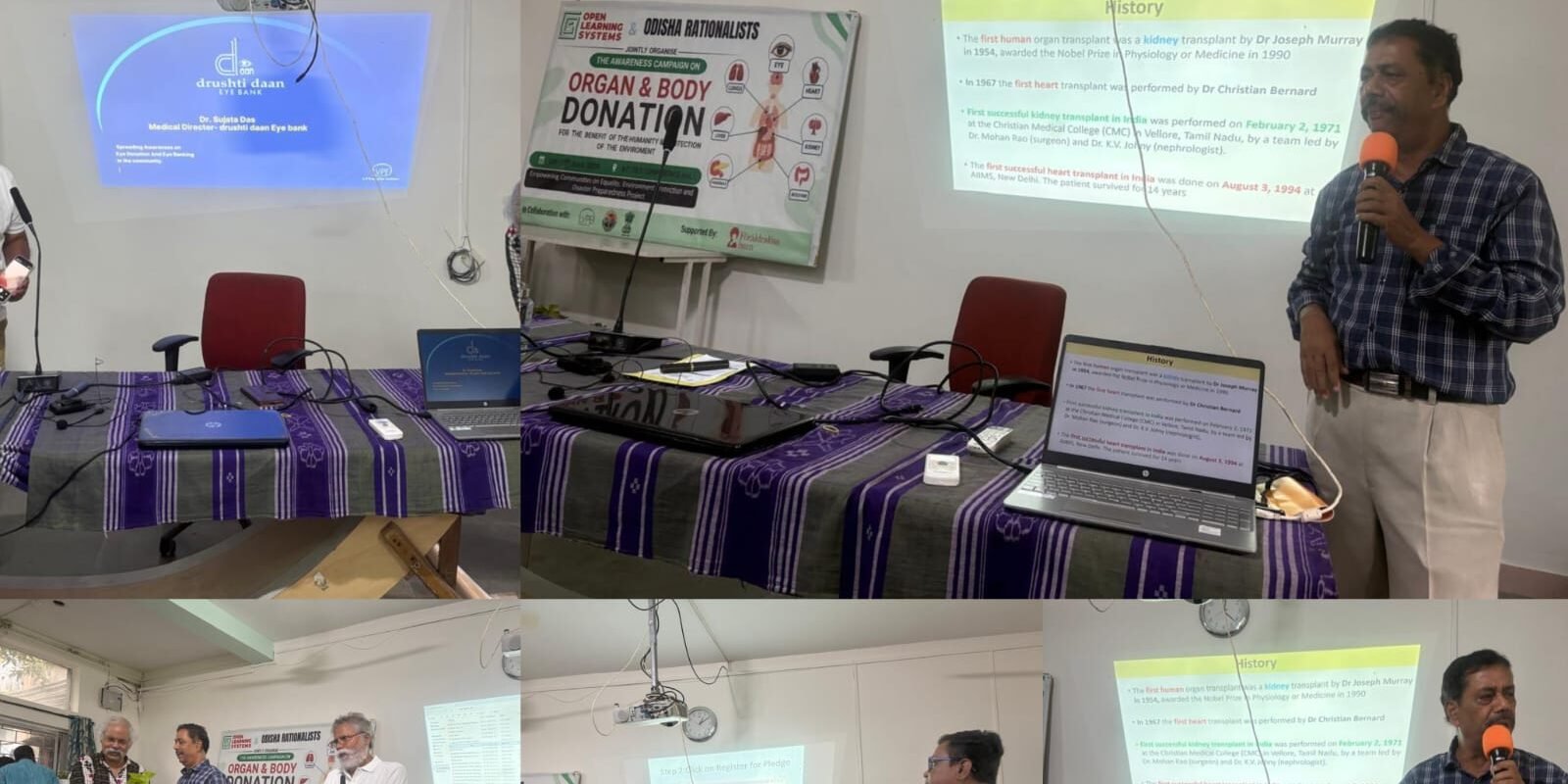
A well known voluntary sector organisation of Odisha, Open Learning Systems along with Odisha Rationalists organised a campaign for organ and body donation under the project entitled “Empowering Communities on Equality, Environment Protection and Disaster Preparedness” on 20th June 2026 at Bhubaneswar which was attended by nearly 75 people from various walks of life.
Presentation on Eye Donation was made by renowned ophthalmologist of LV Prasad Eye Institute, Dr. Sujata Das. Dr. Bibhuti Bhusan Nayak, Joint Director, State Organ and Tissue Transplantation Organisation (SOTTO) made a presentation on organ and body donation followed by a presentation on the process of body donation by Mr. Suman Singh, Consultant, SOTTO. While Dr. Pratap Rath, President, Odisha Rationalists talked of Right to Life with Dignity and why one should donate an organ or the body, Mr. Prakash Rath, CEO, OLS explained the adverse environmental impact of traditional cremation practices and how body donation helps in mitigation of the environmental concerns given as under:
Body donation
When considering end-of-life options, body donation (also known as anatomical gift or whole-body donation) is often overlooked as an eco-friendly choice. However, compared to conventional modern burial and cremation practices, it has a significantly lower environmental impact. Here is how body donation helps protect the environment:
1. Bypassing the Environmental Toll of Conventional Burial
Traditional modern funerals in India and many Western countries come with a massive environmental footprint. By donating your body to science, you entirely avoid:
- • Burning with wood: Followers of Hindu religious practices burn the bodies which require a lot of wood for which many trees are cut. Air becomes polluted with the smoke that emanates from the burning of the bodies. In some religious places bodies are thrown into rivers polluting the water. A lot of paraphernalia are also thrown into the rivers and other water bodies after the rituals.
- • Embalming Fluids: Standard embalming relies heavily on formaldehyde, a known carcinogen. Over time, these toxic chemicals can leach from underground caskets into the surrounding soil and local water tables.
- • Resource Consumption: Traditional burials consume millions of feet of hardwood, tons of steel and copper (for caskets), and massive amounts of reinforced concrete (for burial vaults).
- • Land Preservation: Cremation grounds and cemetery spaces require permanent land allocation and constant upkeep, which often involves pesticide use, heavy water consumption, and mowing. Body donation frees up this land, allowing ecosystems to remain undisturbed.
2. A Drastic Reduction in Carbon Footprint
The most common alternative to traditional burial is standard flame cremation. While it eliminates the chemical and land-use issues of a burial, it is highly energy-intensive.
- • A single standard cremation requires burning fossil fuels at temperatures around 760°C to 1150°C for several hours.
- • This process releases significant amounts of carbon dioxide (CO_2), carbon monoxide, and sometimes vaporized mercury (from dental fillings) into the atmosphere. While bodies donated to medical schools are eventually cremated after study, institutions often use highly efficient, large-scale facilities, or they may utilize alkaline hydrolysis (also known as aquamation or green cremation). Aquamation uses water, alkaline chemicals, and heat to accelerate natural decomposition, using up to 90% less energy than flame cremation and producing zero direct greenhouse gas emissions.
3. Recycling” for the Future of Medical Science
From a purely functional standpoint, body donation is the ultimate form of recycling. Instead of resources being buried or immediately burned, the body serves a vital, multi-year purpose:
- • Training future doctors, surgeons, and physical therapists.
- • Advancing research into diseases like cancer, Alzheimer’s, and Parkinson’s.
- • Testing new medical devices and surgical